Quick answer
PIOL (phakic intraocular lens) surgery places a thin, biocompatible lens inside the eye — in front of your natural lens — to correct moderate to severe myopia, hyperopia and astigmatism. The cornea is not reshaped and the natural lens is kept, so near focusing is preserved and the lens can be removed or exchanged if needed.
- Treats
- High myopia (up to about −20 D), hyperopia, astigmatism
- Procedure time
- 15–30 minutes per eye
- Anesthesia
- Topical drops, outpatient
- Visual recovery
- Usually 24–48 hours
- Best for
- Thin corneas, very high prescriptions
- Typical age
- 21–45 years
What is PIOL?
A phakic IOL is an artificial lens implanted in addition to your eye's natural lens. It works alongside your own optics to bring images into focus, without removing tissue from the cornea. Because the natural lens stays in place, the ability to focus up close (accommodation) is preserved — ideal for younger adults who are not yet presbyopic.
PIOL is the category; ICL is one specific, widely used type of phakic lens — much like “sedan” describes a car type and a particular model is one example.


PIOL vs ICL: what's the difference?
| Aspect | PIOL (phakic intraocular lens) | ICL(Implantable Collamer Lens) |
|---|---|---|
| Definition | General term for lenses implanted without removing the natural lens | A specific type of PIOL made from Collamer®, developed by STAAR Surgical |
| Lens material | Silicone, acrylic or Collamer depending on manufacturer | Collamer®, a soft, biocompatible collagen copolymer |
| Brand | Not a brand — a category of lenses | Brand name (EVO / EVO+ ICL) |
| Placement | Typically behind the iris, in front of the natural lens | Behind the iris, in front of the natural lens |
| Reversible | Yes | Yes |
| Correction range | Varies by lens type | Myopia up to −20.00 D, astigmatism up to 6.00 D |
| UV protection | Depends on the lens | Yes, built in |
Why choose a phakic lens?
Am I a good candidate?
- Aged roughly 21–45 with a stable prescription
- Moderate to high refractive error
- Healthy eyes with a good endothelial cell count
- Adequate anterior chamber depth for the lens
A lens-suitability test (chamber depth, endothelial count, lens sizing) is performed at our Gangnam clinic before surgery.
How the procedure works
- Consultation & sizing Eye measurements, corneal mapping and precise lens sizing.
- Preparation A minor laser iridotomy may be performed to prevent pressure build-up, depending on lens type.
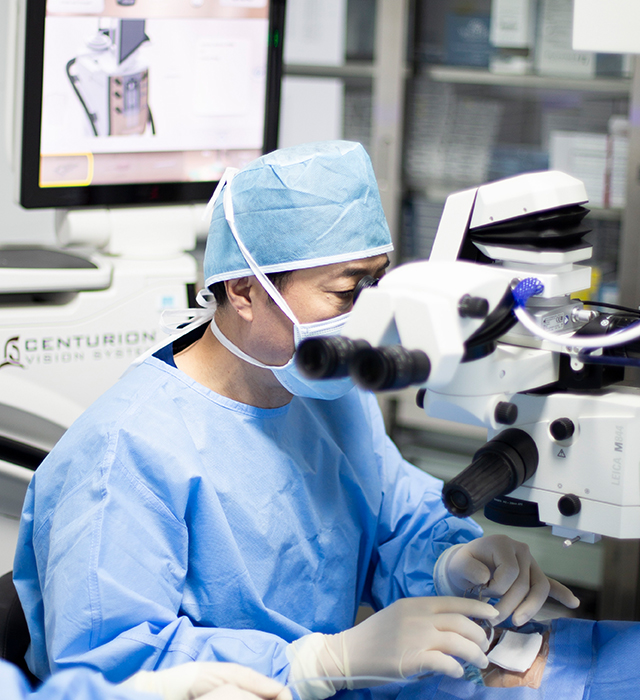
- Lens implantation The lens is inserted through a tiny incision and positioned carefully — about 15–30 minutes.
- Fast recovery Most patients see significantly better within 24–48 hours.
Benefits and considerations
Benefits
- High-definition vision for high prescriptions
- Cornea left intact
- Natural focusing preserved
- Removable / exchangeable
Considerations
- Possible halos or glare at night
- Rarely, raised eye pressure
- Small long-term risk of cataract
- Regular follow-up checks needed
Frequently asked questions
What is the difference between PIOL and ICL?
PIOL is the general term for lenses implanted while keeping the natural lens. ICL (Implantable Collamer Lens) is one specific, popular PIOL placed behind the iris.
Is PIOL surgery permanent?
The lens is designed to stay long-term, but it can be removed or replaced if your eyes or needs change.
Can I feel the lens inside my eye?
No. Once healed, the lens cannot be felt and needs no daily care.
Who is not suitable for PIOL?
People with a shallow anterior chamber, low endothelial cell count, uncontrolled glaucoma or other eye disease may not be suitable.
How soon can I return to work?
Many patients return to desk work within a few days, after the first follow-up check.