
Quick answer
SMILE (Small Incision Lenticule Extraction) is a laser eye surgery that corrects myopia and astigmatism by removing a tiny lens-shaped piece of tissue (lenticule) from inside the cornea through a 2–4 mm keyhole incision. Because no flap is created, most patients return to normal routines within 1–2 days and report less dry eye than with LASIK.
- Treats
- Myopia up to about −10.00 D, astigmatism up to 3.00 D
- Laser time
- Under 1 minute; ~10 minutes per eye in the room
- Anesthesia
- Numbing eye drops — no needles, no stitches
- Back to work
- Usually 1–2 days
- Best for
- Dry eyes, contact sports, high myopia
- Minimum age
- 22+ with a stable prescription for 12 months
What is SMILE eye surgery?
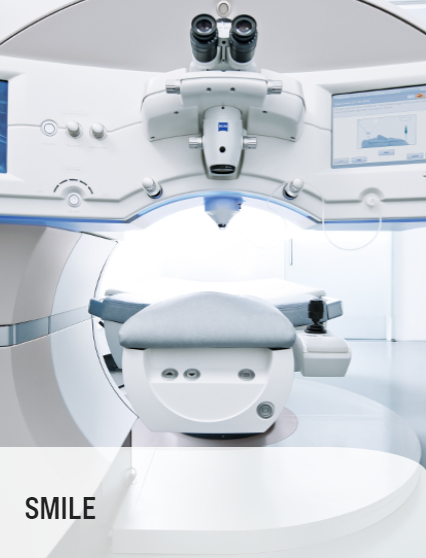
SMILE is a next-generation, femtosecond-laser procedure that reshapes the cornea from within. The laser creates a thin, disc-shaped lenticule inside the intact cornea; your surgeon then removes it through a single micro-incision of less than 4 mm. Taking out the lenticule changes the curvature of the cornea so that light focuses correctly on the retina.
Unlike LASIK, SMILE does not lift a corneal flap, and unlike PRK, the protective surface layer is left untouched — which is why recovery is typically fast and comfortable.


Why patients choose SMILE
- No flap — lower risk of flap-related issues during sports, military service or physical work.
- Fewer corneal nerves cut — which may mean less post-operative dry eye than flap-based surgery.
- Strong for higher prescriptions — designed for moderate to high myopia with astigmatism.
- Quick and comfortable — numbing drops only, no stitches, and most people see well within hours.
Am I a good candidate for SMILE?
You may be suitable for SMILE if you:
- Are 22 years or older with a stable prescription for at least one year
- Have myopia between −1.00 and −10.00 diopters and astigmatism up to 3.00 diopters
- Have healthy corneas with adequate thickness and no active eye disease
- Are not pregnant or breastfeeding
Corneas that are too thin or irregular may be better suited to PRK or a lens-based option such as ICL. A full diagnostic work-up at our Gangnam clinic confirms which procedure is safest for your eyes.
What happens on surgery day
- Pre-operative assessment Corneal topography, thickness and prescription are measured, and your surgeon reviews the plan with you in English.
- Laser treatment After numbing drops, the femtosecond laser shapes the lenticule in under a minute. Most patients describe pressure rather than pain.
- Lenticule removal The lenticule is removed through the small incision. No stitches are needed.
- Same-day rest Vision is often clearer within hours. Arrange for someone to accompany you home.
Benefits, risks and realistic results
Benefits
- Minimal discomfort and downtime
- No corneal flap
- Reduced risk of dry eye vs. LASIK
- Stable, long-term correction
- High satisfaction in published outcome studies
Possible side effects
- Temporary dry eyes
- Light sensitivity, halos or glare at night
- Rarely, infection or need for an enhancement
Your surgeon will explain every risk that applies to you before you decide.
Recovery and aftercare
- Avoid rubbing your eyes or getting water in them for several days
- Use prescribed eye drops exactly as directed
- Wear sunglasses outdoors; skip makeup, swimming pools and hot tubs for at least a few days
- Attend your follow-up checks — international patients can schedule key visits before flying home
Frequently asked questions
Is SMILE better than LASIK?
Neither is better for everyone. SMILE avoids a corneal flap and may cause less dry eye, while LASIK can treat a wider range of prescriptions including farsightedness. Your corneal measurements decide which is safer for you.
Does SMILE eye surgery hurt?
Numbing drops are used, so most patients feel only brief pressure. Mild irritation for a few hours afterwards is common.
How long does SMILE take to recover from?
Most people see clearly within hours and return to work in 1–2 days. Vision continues to stabilise over the following weeks.
Can foreigners have SMILE surgery in Seoul?
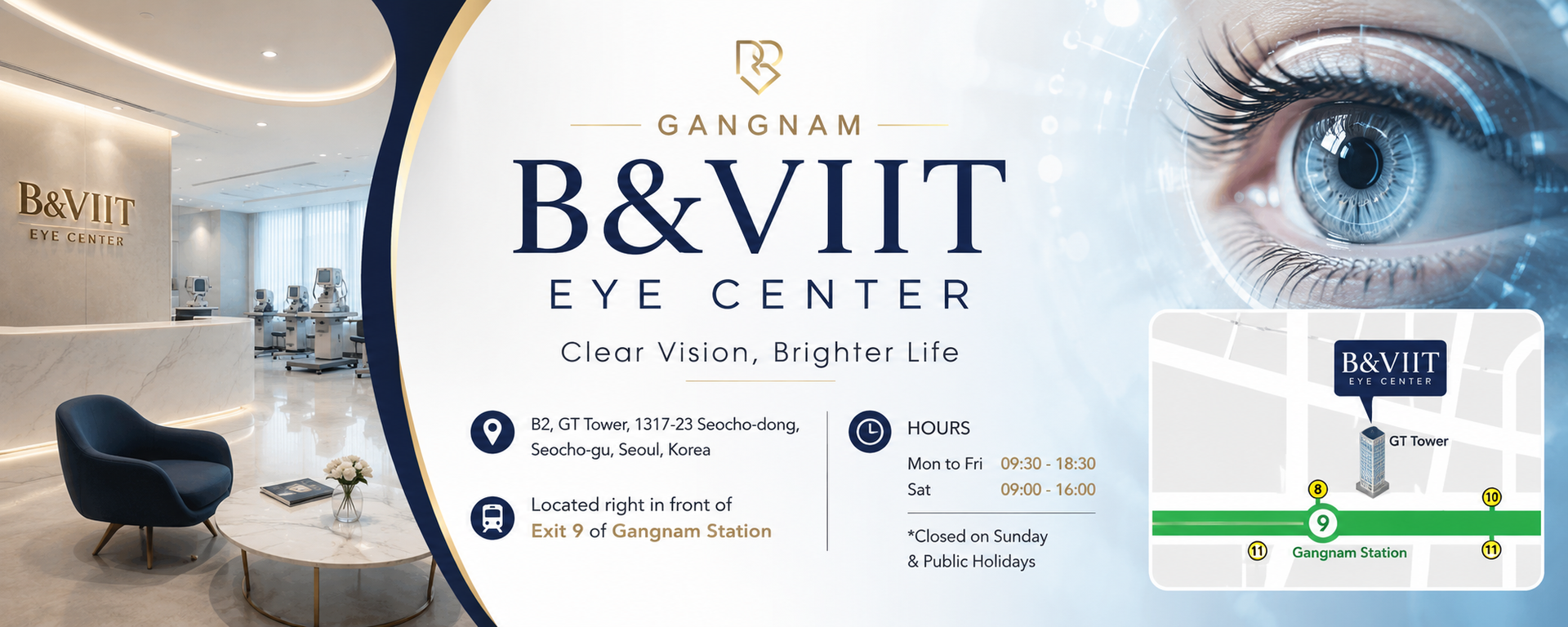
Yes. B&VIIT Eye Center in Gangnam offers English-speaking coordination, and the evaluation and surgery can often be planned within a short stay in Korea.
Who is not suitable for SMILE?
People with thin or irregular corneas, unstable prescriptions, farsightedness, certain eye diseases, or who are pregnant may be advised to consider other options.