
Quick answer
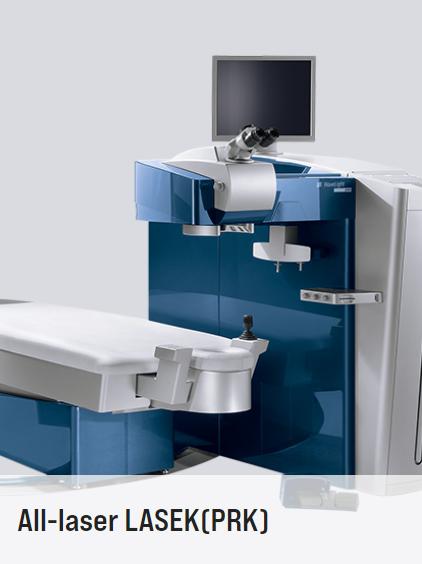
PRK (Photorefractive Keratectomy) corrects myopia, hyperopia and astigmatism by gently removing the corneal surface layer (epithelium) and reshaping the cornea with an excimer laser. No flap is created, making PRK suitable for thinner corneas and contact sports; recovery is slower than LASIK or SMILE, with the surface healing in about 3–5 days.
- Treats
- Myopia, hyperopia, astigmatism
- Procedure time
- Under 10 minutes per eye
- Surface healing
- About 3–5 days with a bandage lens
- Visual recovery
- Improves over 1–2 weeks
- Best for
- Thin corneas, contact sports, military
- Minimum age
- 18+ with a stable prescription
What is PRK?
PRK is a form of laser vision correction that reshapes the surface of the cornea. Instead of creating a flap as in LASIK, the thin outer layer (epithelium) is gently removed and the excimer laser is applied directly to the corneal surface. The epithelium then regrows naturally under a protective bandage contact lens.
Because more of the cornea remains untouched, PRK is often recommended when corneas are too thin for LASIK or SMILE.


Who benefits most from PRK
- Thin or irregular corneas that are not suitable for flap-based surgery
- Chronic dry eye sufferers
- Athletes, military and police — no flap that could be dislodged by impact
- Patients who want a long-proven technique used for decades worldwide
Am I a good candidate for PRK?
- Aged 18 or older with a stable prescription
- Good general and eye health
- Adequate corneal thickness for surface treatment
- Not pregnant or nursing
If your prescription is very high, a lens-based option such as ICL or PIOL may give better quality of vision.
What to expect: day by day
- Diagnostic mapping Topography, thickness and refraction are measured precisely.
- Surgery day The epithelium is removed and the excimer laser reshapes the cornea in under 10 minutes per eye. A bandage lens is placed.
- Days 1–5 Expect light sensitivity, watering and discomfort while the surface heals; the bandage lens is then removed.
- Weeks 1–4 Vision sharpens steadily; full stabilisation can take a few months.
Benefits, risks and realistic results
Benefits
- No flap-related risks
- Suitable for thinner corneas
- Long-lasting results
- Most patients reach 20/20 once healed
Considerations
- More discomfort in the first days
- Slower visual recovery (1–2 weeks)
- Light sensitivity and watering
- Rare corneal haze or infection
Recovery and aftercare
- Use medicated and lubricating drops exactly as prescribed
- Do not rub your eyes; avoid strenuous activity for the first week
- Wear sunglasses outdoors while healing
- Plan to stay in Seoul until the bandage lens is removed (about 5 days)
Frequently asked questions
Is PRK more painful than LASIK?
The procedure itself is painless with numbing drops, but the first 2–3 days of healing are usually more uncomfortable than LASIK. Prescribed drops help control it.
How long until I can see clearly after PRK?
Functional vision returns within about a week, and sharpness keeps improving over several weeks.
Are PRK and LASEK the same?
They are closely related surface treatments; both reshape the cornea without a flap. Your surgeon will choose the technique that suits your cornea.
How long should international patients stay in Korea?
Plan for roughly one week so the bandage lens can be removed and early healing checked before you fly.
Is PRK permanent?
Yes, the corneal reshaping is permanent, although age-related changes such as presbyopia can still occur later.